
17th International Exhibition of Small Form Porcelain in the Riga Porcelain Museum 20.10.2023.-10.12.2023

“Colour, no colour. Chromatic, achromatic. Primary colours, complementary colours, warm and cool tones and halftones. In visual arts, colour and colour blocking are fundamental means of expression. An illusion of tree-dimensionality and realistic impression is achieved by using a range of colour shades representing light and shadow. On the other hand, rhythmically arranged blocks of colour, either in symmetrical or asymmetrical composition, creates abstract expression. Colour impacts our senses.
With our chosen theme – “pure colour” – we invited porcelain artists to think about colour as the medium of meaning. Form, structural construction and silhouette are normally considered to be the most important aspects of sculptural artworks, but how does the meaning and reception of the object change, if colour becomes the dominant means of expression? Pure colour?
The works for the exhibition selected by a jury: Riga Porcelain Museum Director Iliana Veinberga, Riga Porcelain Museum Expositions and Exhibitions Curator Ieva Nagliņa, Riga Porcelain Museum Documents Systems Managers Ginta Eksne and Diāna Lauriņa; and artist Ieva Bertašiūtė Grosbaha.
Participating artists: Iveta Aigare (Latvia), Neringa Akcijonaitytė (Lithuania), Adile Feyza, Cakir Ozgundogdu (Turkey), Ilze Emse-Grīnberga (Latvia), Wen-Hsi Harman (Taiwan), Kimie Ino (Brazil-Japan), Dainis Lesiņš (Latvia), Magdalena Maros (Poland), Valda Podkalne (Latvia), Inita Reimandova (Latvia), Ainārs Rimicāns (Latvia), Līga Skariņa (Latvia), Ivanda Spulle-Meiere (Latvia), Otar Vepkhvadze (Georgia), Solvita Zāle (Latvia) ”

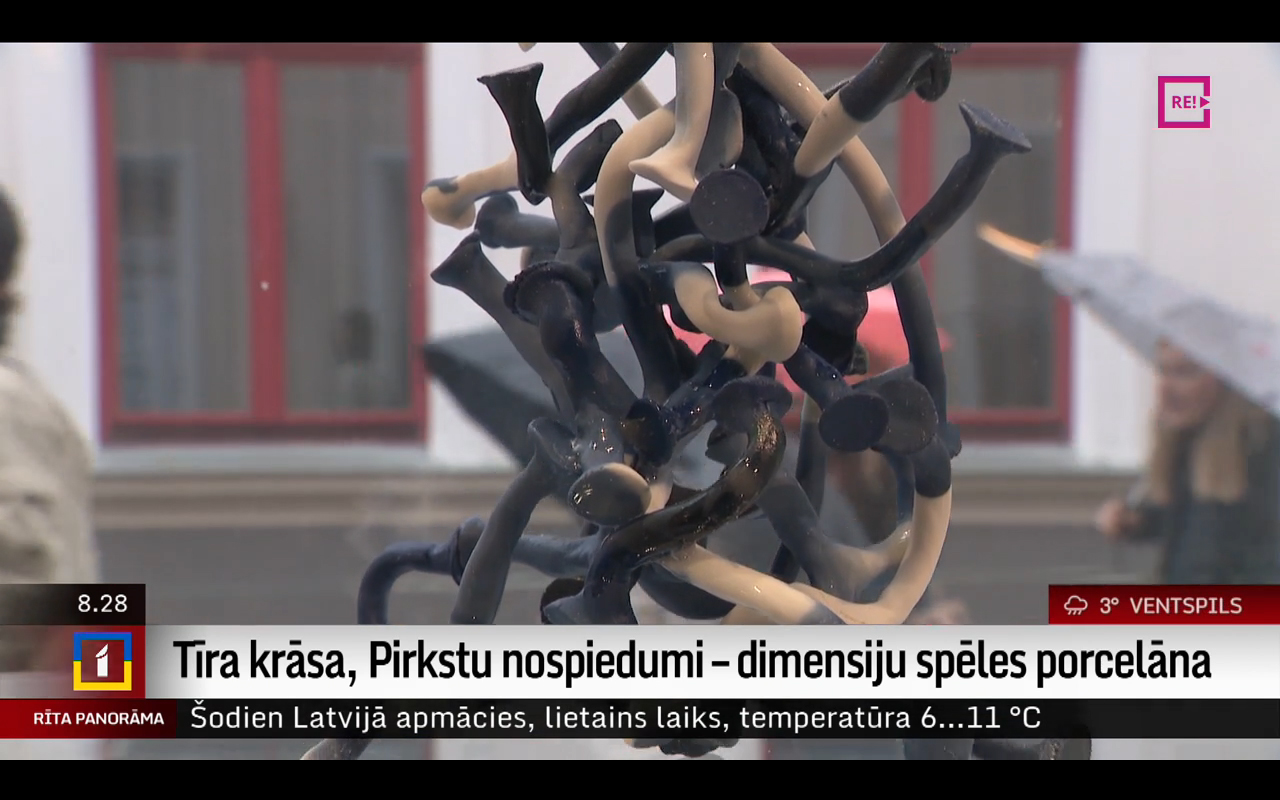
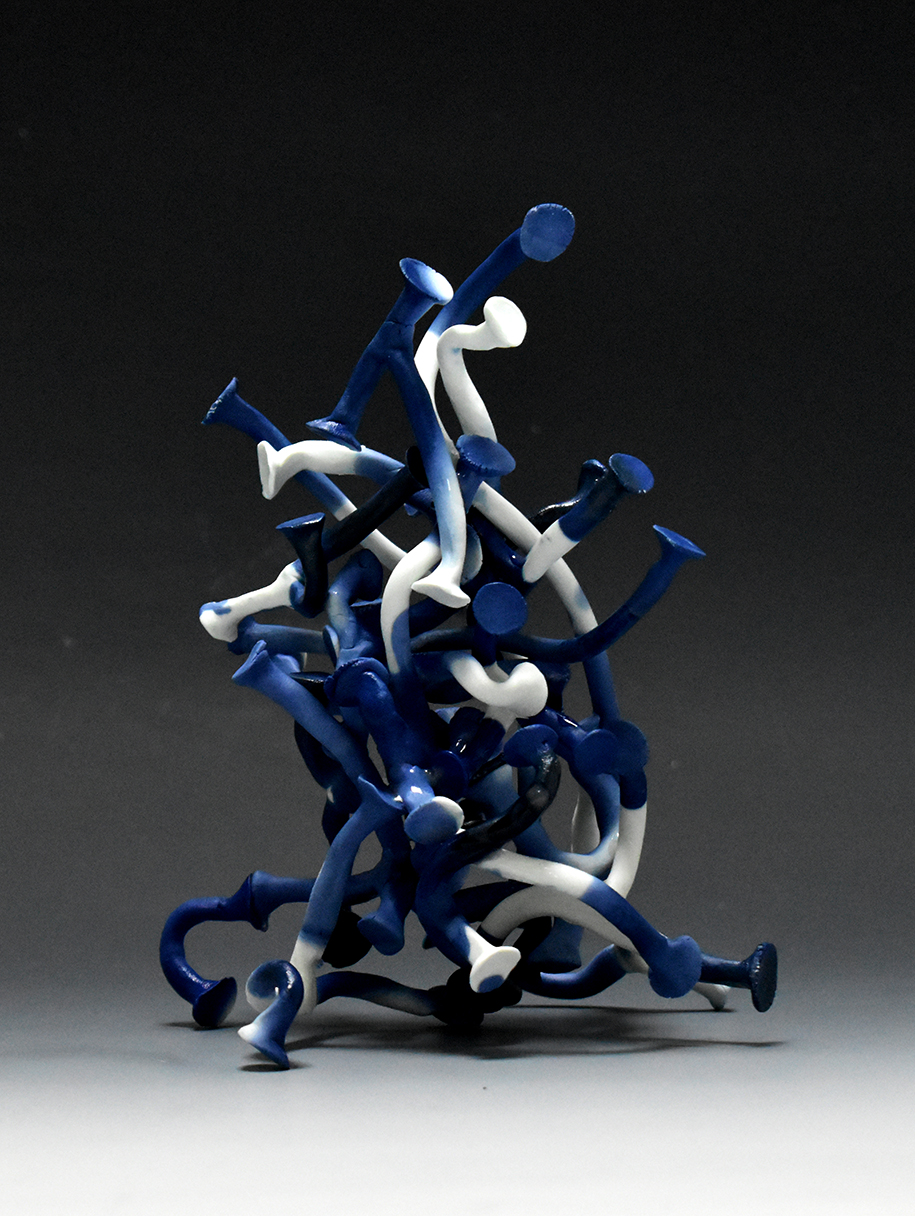
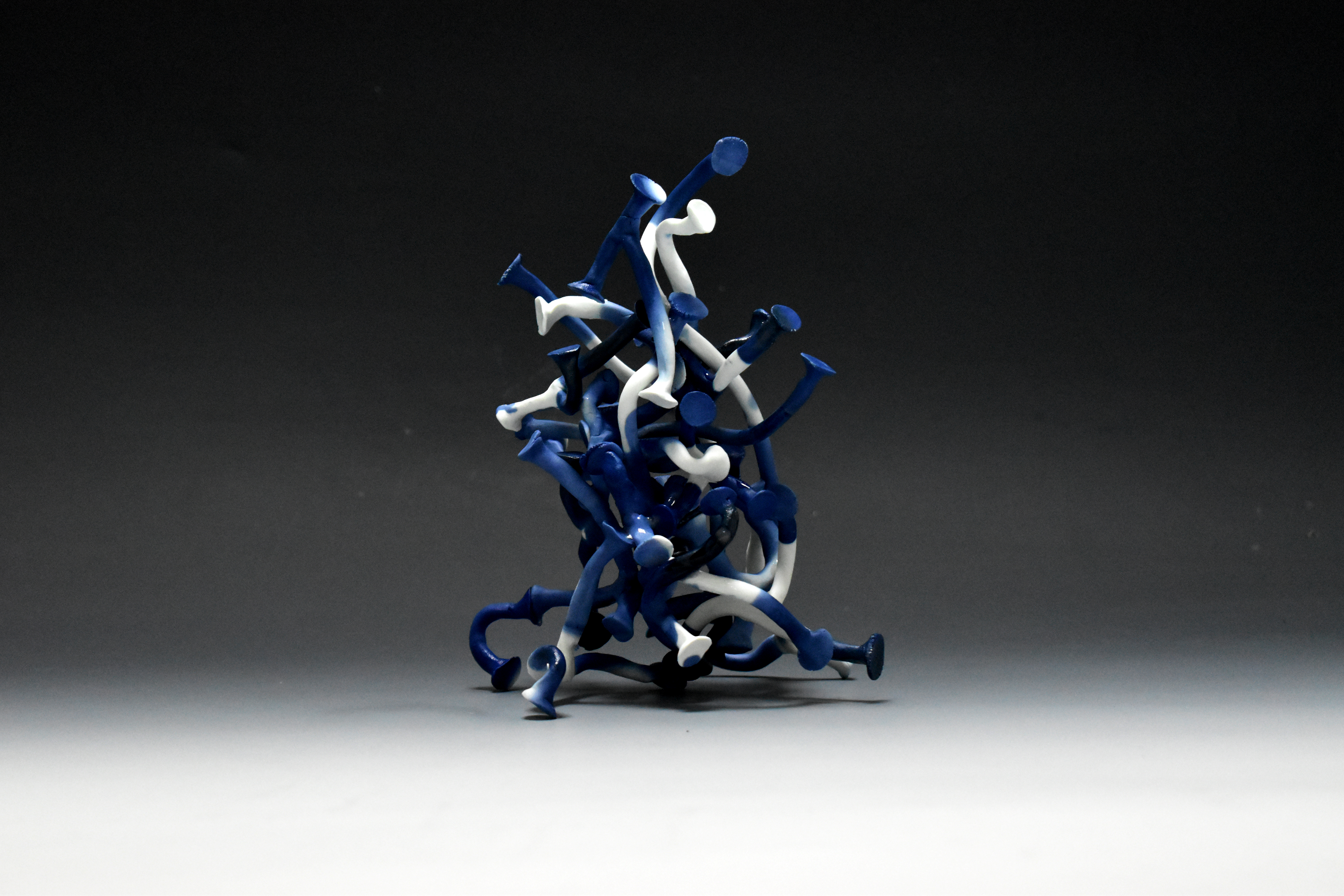
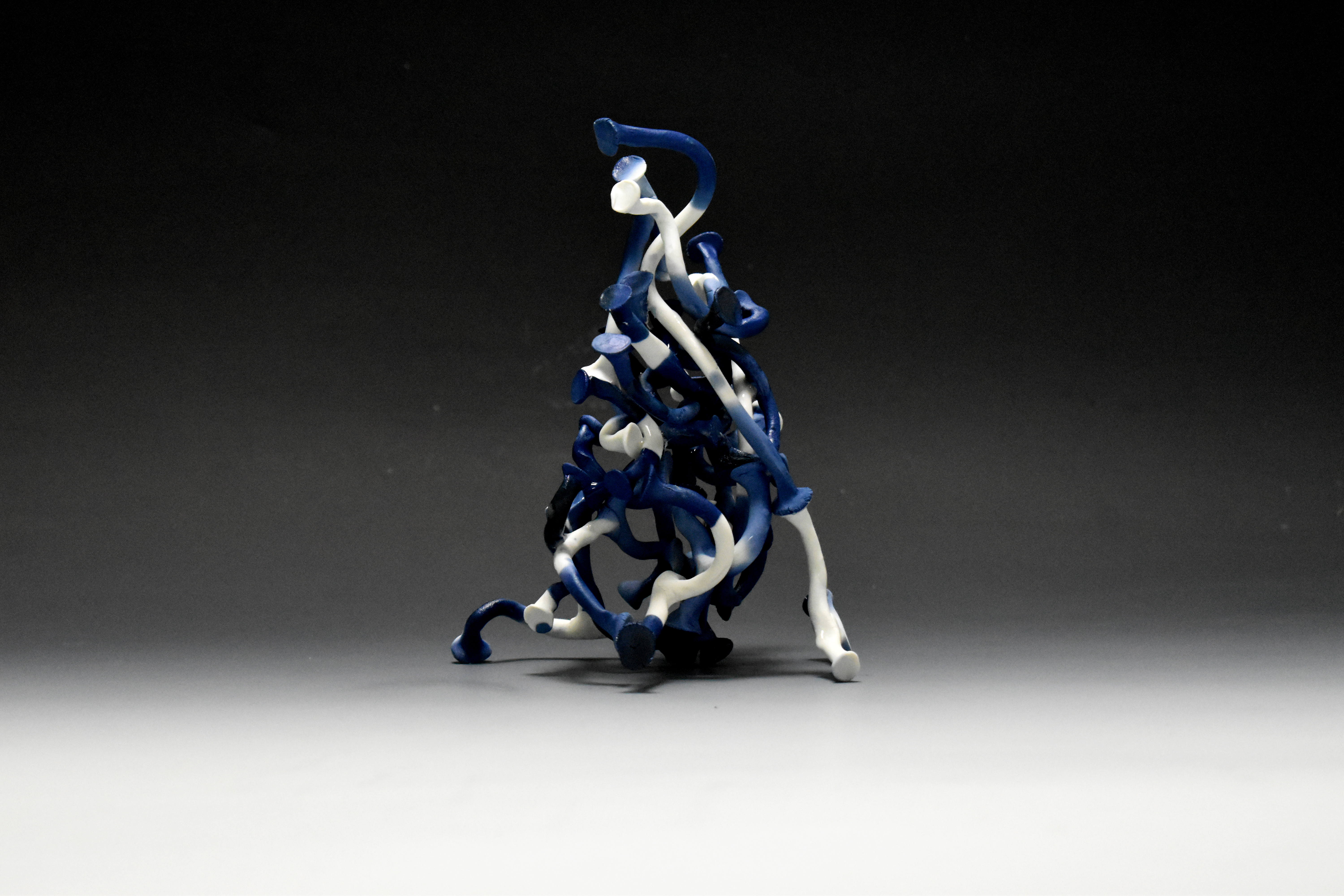
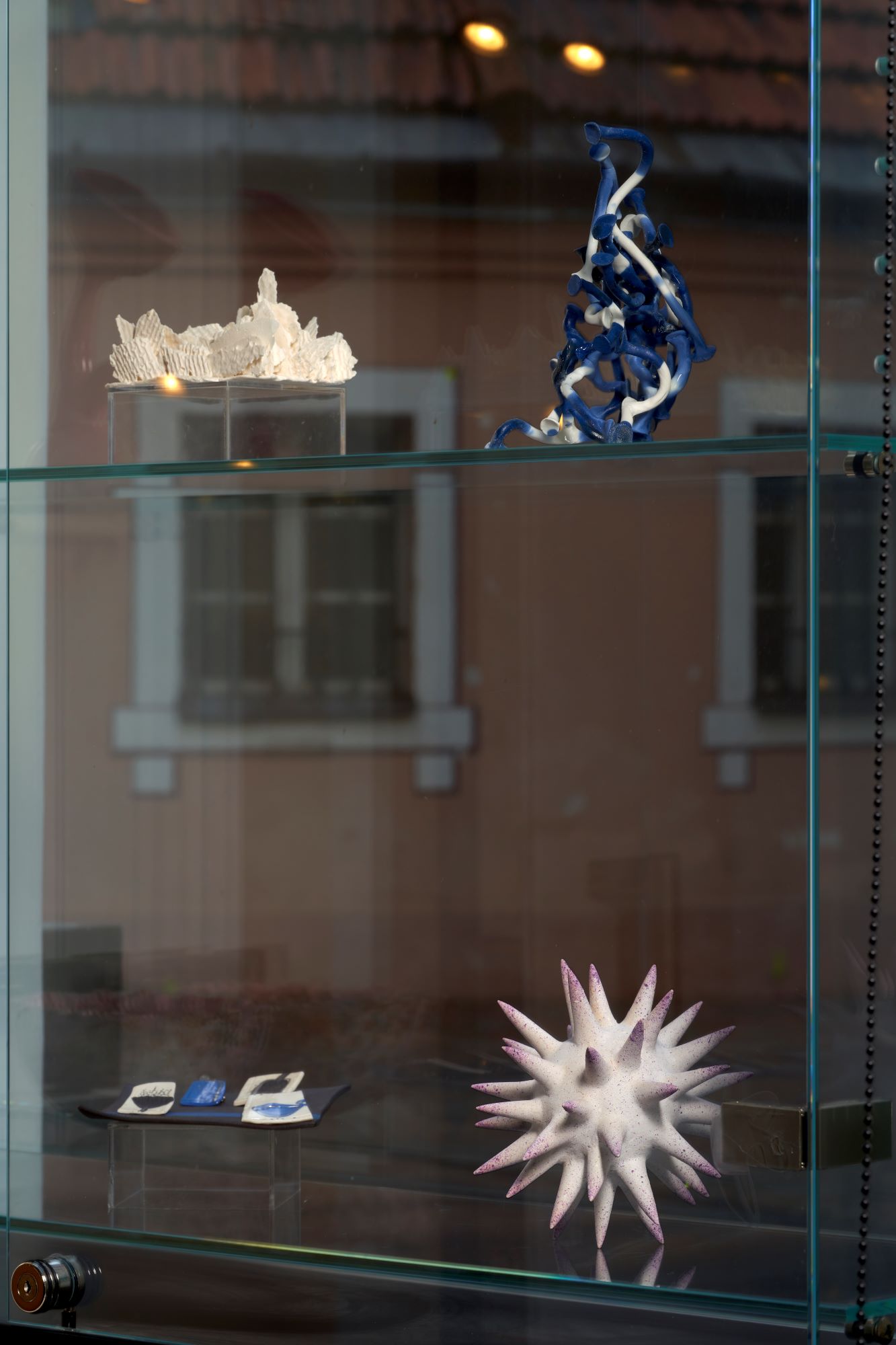
Adile Feyza ÇAKIR ÖZGÜNDOĞDU “Dancing with Cobalt” 18.5 x 15 x 15 cm, Porcelain, 2023

Comments about work’s connection to the theme:
In nature, life and form are often associated with movement. A living, healthy, fertile form is hoped to sprout. But what if life begins before movement, in the nanoworld, when cells vibrate with energy and capillary lines and chemical bonds are organized? What if the center or the brain gives the command to move as soon as the productive chemical relationships are established?
We know paints and pigments as specially synthesized chemical substances. What we are not aware of is that, advanced chemical relationships and large amounts of “energy” are orchestrated to create color. Life and hope start at this point of “energy orchestration”.
Is the glorious effect of the coral under the sea and what attracts a bee to a flower the result of the pigment that we see with our human eyes and other creatures see with their own eyes? Is color “only color”? Or does color attract us because there is more to it? Color must be related to a reality of energy and wavelength beyond our material world. Thus, can we not see color as an indicator and representation of life? If we move from the formation of life in the micro world to the reality of the world we live in; it is as if the charm of dance is beyond the form, the movements, the formal arrangement for both the dancer and the audience. Does the energy of the dancer and the frequency of the audience not herald existence and life to us? At that very moment, we begin to feel the ‘color of dance’! Color is not “only color”: Color means life and hope. The color of “Dancing with Cobalt”, as a presentation of a show that demonstrates the energy of form, means the herald of life to me. (Translation: Esin AYKANAT AVCI)
Doğada canlılık ve biçimlenme, çoğunlukla hareket ile ilişkilendirilir. Canlı olan, sağlıklı olan, üreyebilir olan bir canlı formun filizlenmesi, umut edilen şeydir. Peki ya canlılık hareketten önce, nano dünyada hücrelerin enerjiyle titreşmesi, kılcal hatların düzenlenmesi, kimyasal bağların düzenlenmesiyle başlıyorsa? Üretken kimyasal ilişkilerin nihayet kurulması sonucunda merkez ya da beyin hareket komutunu veriyor ise?
Boyalar ve pigmentleri özel olarak sentezlenmiş kimyasal maddeler olarak biliriz. Bizim bilincinde olmadığımız şey ise, rengin oluşumu için ileri seviyede kimyasal ilişkilerin ve yüksek miktarda “enerji”nin düzenleniyor oluşudur. Canlılık ve umut bu “enerji düzenlenmesi” noktasında başlar.
Denizin altındaki mercandaki o ihtişamlı etki ve bir arıyı çiçeğe yönelten şey bizim insan gözüyle, diğer canlıların da kendi gözleriyle gördüğü pigmentin sonucu mudur? Renk “sadece renk” midir? Yoksa daha fazlası olduğu için mi renk bizi cezbeder? Renk bizim madde dünyamızın ötesinde bir enerji ve dalga boyu gerçekliği ile ilişkili olmalı. Öyleyse rengi canlılığın göstergesi ve temsili olarak göremez miyiz?
Mikro dünyadaki canlılık oluşumundan, yaşadığımız dünya gerçekliğine gelirsek…Dansın cazibesi, dans eden için de, izleyen için de formun, hareketlerin, biçimsel düzenlenişin ötesindedir sanki. Dans edenin sahip olduğu enerji, izleyenin dahil olduğu frekans bize hayatı ve canlılığı müjdelemez mi? İşte o zaman ‘dansın rengini’ hissetmeye başlarız! Renk “sadece renk” değildir: Renk yaşam ve umut demektir. “Kobalt ile Dans”taki renk, formun enerjisini sergileyen bir gösterinin temsili olarak, benim için yaşamın müjdecisi anlamına geliyor.
(15.08.2023, Samsun)
* With the deep sarrow of our witnessing days when all colours are fading. Tüm renklerin solduğu tanıklık günlerimizin derin hüznüyle.
(15.11.2023, Samsun)

 feyzaporcelain